Most people do not fail because they lack ambition. They fail because they inherited a framework that taught them to pursue only what feels safe.
For decades, leaders have been taught to build goals that are specific, measurable, achievable, relevant, and time-bound. On paper, that sounds responsible. Strategic. Professional. But there is a deeper question most organizations never stop to ask: What kind of person does that framework actually produce?
I am Seth Yelorda, a keynote speaker, coach, and consultant, and this is the exact challenge I work through with corporate leaders every day. With over 15 years of senior leadership experience, I help leaders lead with clarity by moving beyond surface-level solutions and into the behaviors that actually rebuild momentum.
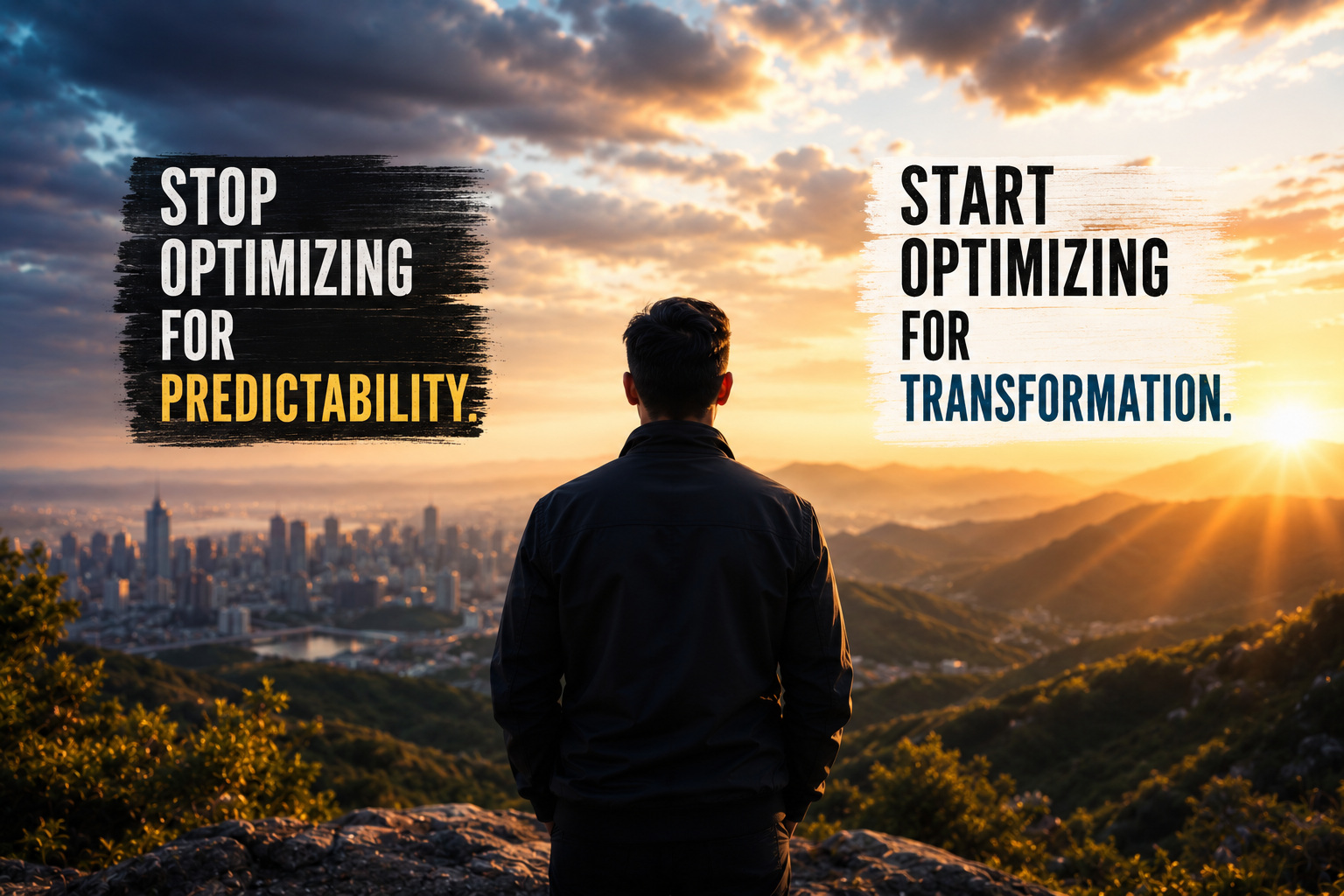
What I have learned is this: many goals are designed to protect people from discomfort rather than transform them through growth. They optimize for predictability, not possibility. They reward caution over courage. And over time, that mindset quietly reshapes organizational culture.
This is why I believe leaders need a different framework. Not one built around comfort, but one built around transformation. Not one focused only on measurable performance, but one focused on meaningful growth.
That is where the BRAVE framework begins.
Some goals improve your resume. Others change who you become.
Why SMART Goals Were Created in the First Place
The SMART goal framework was originally introduced in 1981 by consultant George T. Doran in a management-focused article for corporate planning and productivity. It was designed to improve clarity inside organizations and reduce ambiguity around performance expectations. In that context, it made sense. Businesses needed measurable objectives. Managers needed accountability systems. Teams needed benchmarks.
And to be clear, SMART goals can still serve a purpose in operational environments. If a company needs to improve delivery timelines by 12 percent or reduce turnover by a measurable amount, SMART objectives can help create structure and accountability. In execution-based environments, predictability matters.
But the problem begins when people apply operational frameworks to transformational growth.
The same system that helps manage quarterly outputs often becomes the lens people use to define their entire future. That is where things start to break down. Because transformation rarely begins with something achievable. Most meaningful growth starts with uncertainty.
When leaders only pursue what feels realistic, they unintentionally shrink their vision to match their current identity. The goal stops being about expansion and becomes an exercise in maintenance. That mindset may create short-term stability, but it often produces long-term stagnation.
According to research published through the Harvard Business Review, meaningful progress is deeply connected to motivation and emotional engagement. Yet many professionals continue chasing goals that look impressive externally while feeling emotionally disconnected internally.
That disconnect is becoming increasingly common in modern leadership.
The Hidden Problem With “Achievable” Thinking
The most dangerous word inside the SMART framework may be “achievable.”
On the surface, achievable sounds wise. Practical. Responsible. But psychologically, it often becomes a filter that eliminates the very goals capable of transforming someone’s life or leadership.
Most people define achievable based on their current experience, current confidence, and current limitations. In other words, they define possibility through the lens of who they already are.
That is the problem.
If every goal fits neatly within your existing capacity, then the goal does not require growth. It only requires repetition.
The leaders I work with inside organizations are often highly accomplished people. They have titles, influence, experience, and measurable success. Yet many quietly admit they feel stuck. Not because they are failing, but because they are no longer evolving.
They have learned how to perform.
They have not learned how to expand.
This is one reason why high-achieving professionals can still feel disconnected after reaching major milestones. The achievement itself was never aligned with deeper transformation. It checked boxes but did not reshape identity.
The truth is that many leaders are exhausted from succeeding at goals they never deeply believed in.
That is why leadership development and team engagement cannot simply revolve around performance metrics. Sustainable momentum comes from alignment. It comes from building goals that challenge not only what a leader does, but who a leader becomes.
Comfort-Based Goals Quietly Limit Organizations
Every organization eventually reflects the emotional ceiling of its leadership.
When leaders normalize safe thinking, teams begin protecting themselves instead of stretching themselves. Innovation slows. Creativity narrows. Risk tolerance disappears. Meetings become more political than productive because employees begin optimizing for approval instead of contribution.
This is one reason many companies struggle to create truly high-performing cultures even after investing heavily in strategy, systems, and talent acquisition.
Culture is not built primarily through mission statements.
Culture is built through tolerated behaviors.
If leadership rewards predictability above courage, employees will eventually stop bringing bold ideas to the table. They will protect their position rather than challenge the status quo.
Organizations that cultivate psychological safety and adaptive leadership practices consistently outperform cultures built around fear-based risk avoidance. Teams perform better when leaders create environments where thoughtful risk is encouraged rather than punished.
That does not mean organizations should become reckless.
It means leaders must stop confusing comfort with wisdom.
Some of the greatest breakthroughs in business, leadership, innovation, and culture happened because someone pursued a vision that initially looked unrealistic.
Transformation almost always feels uncomfortable before it becomes obvious.
The Difference Between Measurable Success and Meaningful Growth
One of the greatest leadership tensions today is the difference between measurable success and meaningful growth.
Measurable success is external.
Meaningful growth is internal.
Measurable success can be tracked through promotions, revenue, expansion, recognition, or visibility. Those things matter. Businesses need measurable outcomes.
But meaningful growth asks deeper questions.
Did the goal make you more courageous?
Did it deepen your integrity?
Did it strengthen your clarity?
Did it require emotional maturity?
Did it force you to confront fear, insecurity, or self-protection?
Those are transformational questions.
And most leadership frameworks never address them.
This is why so many accomplished professionals feel emotionally exhausted despite appearing successful from the outside. They mastered achievement while neglecting alignment.
I have seen leaders spend years climbing ladders they secretly no longer wanted to climb.
I have also seen organizations chase growth strategies that increased revenue while damaging culture, trust, and long-term sustainability.
Without alignment, success eventually becomes expensive.
That is why strategic leadership development must involve more than operational improvement. Organizations do not just need better systems. They need healthier leadership psychology. The future belongs to leaders who know how to create both measurable outcomes and meaningful transformation.
Introducing the BRAVE Framework
The BRAVE framework exists because transformational leadership requires more than predictable goals.
BRAVE goals are not designed merely to help people accomplish tasks.
They are designed to shape identity.
B — Bigger Than Your Current Capacity
A BRAVE goal should intimidate your current skill set.
Not because recklessness is wise, but because growth requires expansion. If your goal only fits inside your existing comfort zone, it will rarely stretch your leadership capacity.
Many leaders underestimate what becomes possible when they stop building goals around present limitations.
The purpose of a transformative goal is not merely completion. It is development.
R — Risky Enough That You Could Actually Fail
Most people secretly design goals that guarantee emotional safety.
But if failure is impossible, transformation is unlikely.
Risk exposes character.
It reveals how leaders respond under uncertainty, pressure, rejection, and resistance. That process builds emotional resilience and leadership maturity in ways comfortable success never can.
This does not mean organizations should abandon strategic thinking. It means courageous leadership requires enough emotional investment that the outcome genuinely matters.
A — Aligned With Who You Were Built to Be
Alignment changes everything.
Many professionals are pursuing goals that were inherited from culture, comparison, ego, or external pressure.
A BRAVE goal forces leaders to ask whether the vision actually reflects who they are becoming.
That kind of clarity is essential for sustainable leadership.
Without alignment, ambition eventually becomes exhausting.
With alignment, even difficult seasons carry meaning.
V — Vivid Enough to See Before It Exists
Leaders must learn how to see beyond current conditions.
Vision is not denial of reality. It is the ability to imagine a different future before external evidence fully supports it.
The most influential leaders throughout history were able to articulate possibilities others could not yet see.
That ability creates momentum.
It creates belief.
It creates direction.
This is why clarity, leadership, communication, and organizational alignment matter so deeply inside companies. Teams move toward the pictures leaders consistently paint.
E — Eternal: The Fruit Outlasts You
This may be the most important part of all.
A BRAVE goal creates impact beyond immediate achievement.
It influences people.
It develops culture.
It leaves something valuable behind.
Too many goals revolve around personal recognition.
Transformational leadership asks a different question:
Who becomes healthier, stronger, wiser, or more empowered because this vision existed?
That is legacy.
And legacy-driven leadership changes organizations at the deepest level.
Why BRAVE Goals Create Better Leaders
BRAVE goals fundamentally reshape leadership because they force people to confront reality honestly.
SMART goals often focus heavily on execution.
BRAVE goals focus on identity.
Identity-driven growth changes how leaders communicate, think, adapt, and influence others. It creates deeper emotional intelligence because the process requires self-awareness. It builds resilience because leaders must navigate uncertainty instead of avoiding it.
It also creates healthier teams.
Employees can immediately sense the difference between leaders pursuing meaningful vision and leaders merely protecting performance metrics.
People do not rally around spreadsheets.
They rally around conviction.
This is especially important in today’s workplace, where disengagement continues to rise across industries. According to Gallup’s workplace research, employee engagement remains deeply connected to leadership quality, purpose, and emotional connection inside organizations.
Leaders who pursue transformational goals create environments where employees feel connected to something larger than routine productivity.
That is how momentum returns.
That is how cultures become energized again.
That is how organizations build trust.
Courage Is the Missing Leadership Skill
Most leadership conversations revolve around strategy.
Very few revolve around courage.
But courage is often the deciding factor between organizations that slowly decline and organizations that adapt, innovate, and grow.
Courage allows leaders to confront difficult truths.
Courage allows teams to challenge outdated assumptions.
Courage allows organizations to evolve.
Without courage, even the best strategy eventually becomes limited by fear.
This is why I believe modern leadership development must move beyond surface-level performance conversations.
Organizations do not simply need more efficient leaders.
They need clearer leaders.
Leaders who know how to think deeply.
Leaders who know how to align vision with values.
Leaders who are willing to pursue meaningful transformation instead of merely maintaining professional comfort.
That kind of leadership changes organizations from the inside out.
And it begins with the willingness to pursue goals that require courage.
Frequently Asked Questions
Many leaders and organizations are beginning to recognize that traditional goal-setting frameworks are no longer enough to sustain innovation, engagement, and long-term momentum. Below are some of the most common questions I receive from executives, managers, and leadership teams about the BRAVE framework and transformational leadership development.
Are SMART goals completely ineffective?
No. SMART goals still serve an important role in operational execution and accountability. Businesses need measurable objectives. Teams need clarity around timelines, deliverables, and performance expectations.
The issue is not that SMART goals are inherently bad. The issue is that they were never designed to drive deep personal transformation. They work best for execution-focused environments, not identity-level growth.
That is why I encourage organizations to use SMART goals operationally while using BRAVE goals developmentally.
How can leaders encourage courageous thinking without creating chaos?
Courage and recklessness are not the same thing.
Healthy organizations still require structure, accountability, and strategic thinking. But courageous leadership creates space for thoughtful risk, innovation, and honest conversation.
That starts with psychological safety. Employees must know they can contribute ideas, challenge assumptions, and engage in difficult conversations without fear of humiliation or punishment.
The strongest cultures are not built on comfort. They are built on trust.
Why do many successful leaders still feel disconnected?
Because achievement and alignment are not always the same thing.
Many leaders spend years pursuing goals that looked impressive externally but were never connected to deeper purpose or authentic vision. Over time, that disconnect creates emotional exhaustion.
Meaningful leadership requires more than accomplishment. It requires clarity around identity, values, and long-term impact.
That is why transformational leadership development focuses on both external performance and internal alignment.
How can organizations begin implementing the BRAVE framework?
Organizations can start by changing the conversations leaders have around growth.
Instead of only asking whether a goal is achievable, leaders should ask whether the goal requires development, courage, alignment, vision, and lasting impact.
Leadership teams should also evaluate whether current performance systems unintentionally reward safety more than innovation.
When organizations create cultures where thoughtful courage is valued, transformation becomes far more possible.
Lead With Clarity. Partner With Me.
I help organizations move beyond reactive leadership and into transformational clarity. As a keynote speaker, coach, and consultant, I work with executives, leadership teams, and organizations that want more than temporary motivation. They want sustainable momentum, healthier culture, and leadership that creates measurable and meaningful growth.
With over 15 years of senior leadership experience, I help leaders cut through noise, confront limiting patterns, and build the clarity necessary to lead high-trust, high-performing teams. My work focuses on helping organizations strengthen leadership development, improve team engagement, increase organizational alignment, and cultivate vision-driven cultures that thrive under pressure.
Seth Yelorda challenges leaders to go beyond surface-level leadership and embrace the courage required to lead with clarity. Drawing from years of organizational and pastoral leadership experience, I help companies build healthier cultures by developing leaders who communicate vision effectively, confront reality honestly, and create environments where people can truly grow.
Whether you are developing emerging leaders, strengthening executive teams, or building a culture capable of sustainable transformation, I would love to partner with your organization.
Book Seth: Book Seth
Email: seth@sethyelorda.com